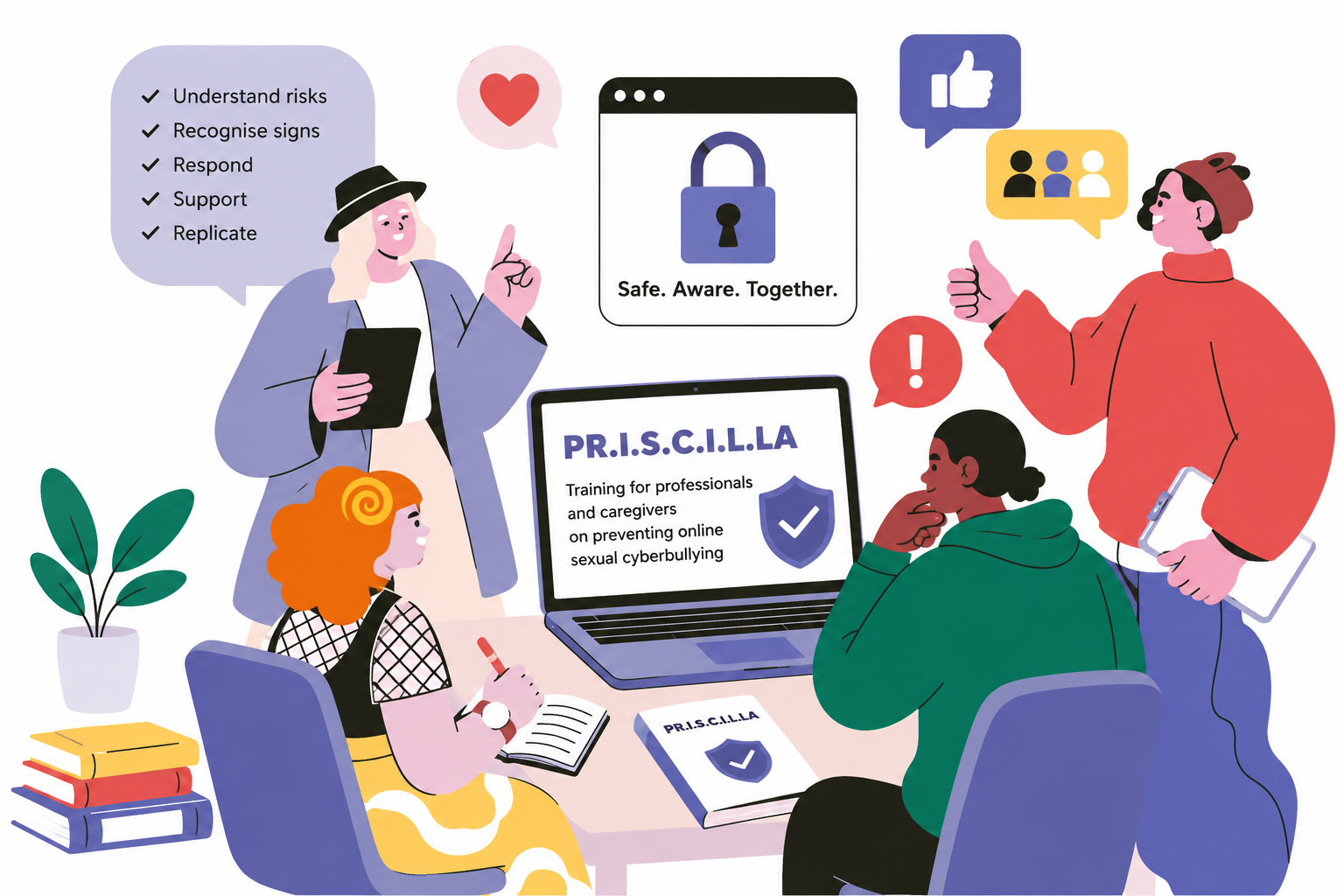
The PR.I.S.C.I.L.LA project continues its commitment to preventing digital risks through the development of a training programme addressed to professionals and caregivers working with young people with intellectual disabilities. In a context where the use of social media is increasingly widespread, it is essential to strengthen the competences of those who support young people, enabling them to guide them in a safe, aware and effective way in the digital environment.
This new training pathway complements the educational programme designed for young people with ID, with the aim of providing professionals with the tools needed to replicate its content and to offer qualified support in cases of online risk or abuse, particularly those related to sexual cyberbullying.
The training programme: objectives and approach
The programme is designed as a e- learning course, combining online theoretical learning practical activities, for a total duration of approximately 7 hours. The methodological approach is based on active, interactive and multisensory learning techniques, including case studies, role playing, audiovisual materials and artistic stimuli to foster engagement and reflection.
The main objectives of the programme are to:
• understand the risks and opportunities related to the use of social media by young people with intellectual disabilities;
• recognise indicators of digital sexual harassment and cyberbullying;
• acquire strategies to respond appropriately to risky situations;
• support young people in developing a conscious use of social media, also through the concept of “positive risk-taking”;
• effectively replicate the educational programme developed within the project.
The programme is grounded in key educational principles such as self-determination, supported decision-making and the promotion of a balance between protection and autonomy.
Structure of the training curriculum
The programme is structured into five modules, each lasting approximately 1.5 hours, designed to
provide practical and immediately applicable skills in professional settings:
1. Use of social media and interpersonal relationships: explores the benefits and risks of social media use, focusing on its impact on the development of personal and affective relationships among young people with intellectual disabilities. It provides tools to understand digital communication and support healthy and conscious interactions;
2. Supporting positive risk-taking: introduces strategies to accompany young people in exploring social media safely, promoting autonomy and awareness. The module focuses on balancing independence and protection, and provides tools to support decision-making processes;
3. Recognising signs of cyberbullying: offers practical guidance to identify behavioural and emotional indicators of risk, together with concrete examples and observation tools;
4. Responding to online risky situations: provides operational guidelines for intervening in case of negative online experiences, with particular attention to emotional aspects, crisis management and collaboration with families and services. It also includes references to legal responsibilities and reporting procedures;
5. Implementing the PR.I.S.C.I.L.LA programme in local contexts: offers practical guidance on how to adapt and replicate the educational programme in different contexts, taking into account target groups and available resources.
Expected results and impact
At the end of the programme, participants will be able to guide young people with intellectual disabilities in using social media in a safer and more conscious way, while promoting autonomy, well-being and digital inclusion.
The programme also aims to improve the quality of youth work by fostering a more skilled and aware workforce, better equipped to address the challenges of the digital world. The approach values the involvement of families and multidisciplinary collaboration, which are essential for providing effective and long-term support.
Participants who complete the training will receive a Youthpass certificate, recognising the competences acquired during the programme.
A step forward towards safer and more inclusive digital communities
With this new training programme, the PR.I.S.C.I.L.LA project strengthens its impact by extending its educational action to adults who support young people, creating the conditions for a wider and more sustainable dissemination of digital competences.
Investing in the training of professionals and caregivers means building a stronger support system, capable of preventing online risks and promoting a positive, conscious and safe use of social media among young people with intellectual disabilities.
This press release is available in: